

Chickweed
Stellaria media
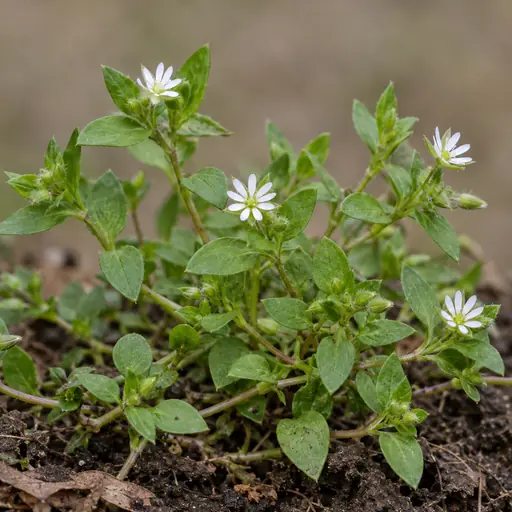
A low plant with small white flowers and oval leaves. It is very nutritious.
How to recognise it
Chickweed is a low, sprawling plant with weak, round, juicy stems. The leaves are small, pointed ovals in opposite pairs. The lower ones sit on short stalks. A single line of fine hairs runs down the stem. It switches sides at each pair of leaves. The white flowers are star-shaped, with five petals. Each petal is split so deeply that they look like ten. There are two toxic look-alikes. Scarlet pimpernel has square, hairless stems and stalkless leaves with black dots underneath. Its flowers are orange-red or blue. Spurges ooze white, milky sap from a broken stem. Chickweed never does.
Where it grows
Look in gardens, vegetable beds, field edges and farmyards. It likes disturbed, rich, moist soil, often in light shade. It is one of the commonest plants in Europe and is found across the US.
When
It grows best in cool, damp weather. In the north that means spring and autumn. In mild areas such as southern Europe and the southern US it grows from autumn to spring. Summer heat and drought make it die back until the autumn rains.
Picking
Snip or pinch off the leafy top few centimetres. The plant grows back. Only pick where no weedkiller has been sprayed. Stay away from roads and from spots where dogs and cats go.
Cooking
Once you're sure of it, you can eat the leaves, stems and flowers raw or briefly cooked. They taste mild and fresh, a little like young peas. Add them to salads, sandwiches and pesto, or stir them into soups at the end. Wash them well.
Keeping
Chickweed wilts quickly. Keep it in a bag in the fridge and eat it within a day or two.
Toxic look-alikes
- Lysimachia arvensis · Toxic - do not eat
- Euphorbia peplus · Toxic - do not eat
Sources: Identification: UC Statewide IPM Program and Woodland Trust. Scarlet pimpernel: Ontario Ministry of Agriculture. Season: Woodland Trust and GBIF records.
Always consult an expert before consuming any wild food. This information is for educational purposes only.