

Hazelnut
Corylus avellana
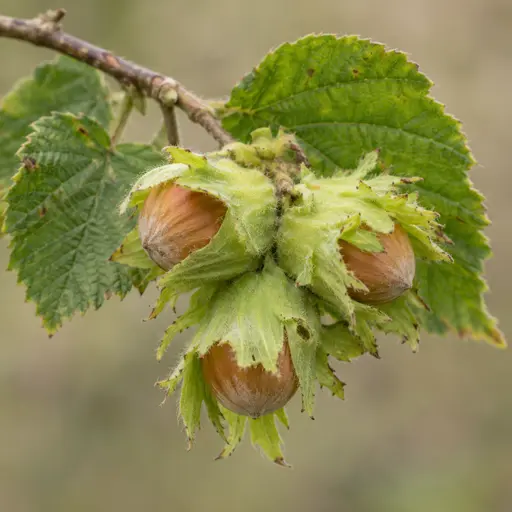
Sweet, round nuts from hazel bushes.
How to recognise it
Hazel is a shrub or small tree with many stems. Its leaves are round and doubly toothed, pointed at the tip and soft and downy underneath. In late winter yellow catkins hang from the bare twigs. The nuts grow in bunches of one to four. Each sits in a frilly, green, leafy husk that covers about three quarters of it. They turn brown as they ripen. North America's wild hazels are close relatives. The beaked hazelnut's husk forms a long bristly tube.
Where it grows
It grows in the understorey of woods, in hedgerows and in scrub across Europe. In the south it is mostly found in hills and mountains. It fruits best in sun, at woodland edges. In the US the European hazel grows mainly in orchards in Oregon. The wild species grow in thickets, clearings and at woodland edges.
When
The nuts come from late August to October. They are ready when the husk browns and they fall or come loose with a light shake. Squirrels, jays and dormice often get there first.
Picking
Gather fallen nuts or shake the branches lightly. Leave plenty for wildlife. Skip nuts with a small round hole, because a weevil larva has eaten the kernel. Skip light ones too. Avoid busy roadsides and sprayed field edges.
Cooking
Once you're sure of the plant, eat them raw or roast them until the skins crack. Then rub the skins off in a rough cloth. Use them in cakes, pralines, pesto and salads. Hazelnuts are a common cause of nut allergy.
Keeping
Dry them in the shell in an airy place until the kernel is cream-coloured right through. Then store them somewhere cool and dry. Dried nuts keep up to a year in the fridge.
Sources: Identification and habitat: Woodland Trust and Minnesota Department of Natural Resources. Drying and storage: Oregon State University Extension.
Always consult an expert before consuming any wild food. This information is for educational purposes only.