

Wild Raspberry
Rubus idaeus
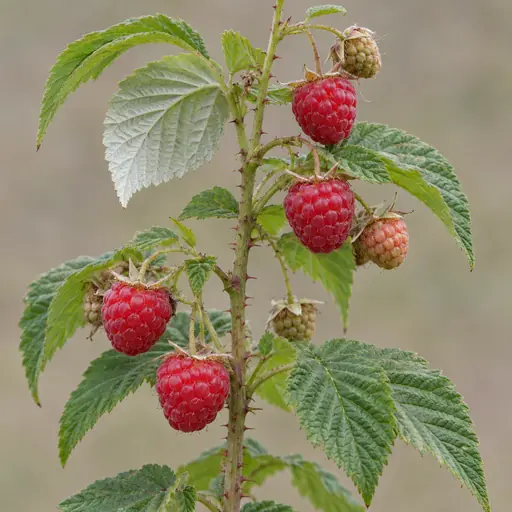
Sweet red berries on thorny canes.
How to recognise it
Raspberries grow on upright canes, often head-high. The canes are covered in small, fine prickles, not the hooked thorns of a blackberry. Each leaf has three to seven toothed leaflets set along a stalk. They are green above and white-felted beneath. The small white flowers hang downwards. When you pick a red berry, its white core stays on the plant. So a picked raspberry is a hollow cap.
Where it grows
Look in woodland clearings and edges, on felled and burnt ground and on rocky slopes. It also grows in scrub, heathland and hedgerows, from the lowlands into the mountains across Europe. It moves into new clearings and fades as the trees grow back. In the US, American red raspberry grows across the north and in the western mountains. The black raspberry, with purple-black hollow berries, grows in the east.
When
Raspberries ripen in summer. In southern Europe and the lowlands they start in June. In the north and in the mountains they ripen in July and August. Up high they sometimes last into September.
Picking
Pick berries that are fully red and slip off the core without pulling. Put them in a shallow container, as they crush easily. In central Europe, Bavaria's health authority (LGL) says eating wild berries has not been shown to be a risk factor for fox tapeworm. It still advises washing them well. Only heating above 60 °C kills the tapeworm's eggs. Home freezing does not.
Cooking
With the identification certain, eat them raw or use them for jam, syrup, cakes and desserts. Wild raspberries are smaller and more aromatic than garden ones. Rinse them briefly just before use. Check them for the small white larvae of the raspberry beetle.
Keeping
Raspberries are very perishable. Eat them the same day, or keep them unwashed in the fridge for a day or two. To freeze them, spread them on a tray first, then bag them. Frozen berries suit sauces and baking.
Sources: Identification and habitat: Woodland Trust. Fox tapeworm: Bavarian State Office for Health and Food Safety (LGL).
Always consult an expert before consuming any wild food. This information is for educational purposes only.