

Smooth Chanterelle
Cantharellus lateritius
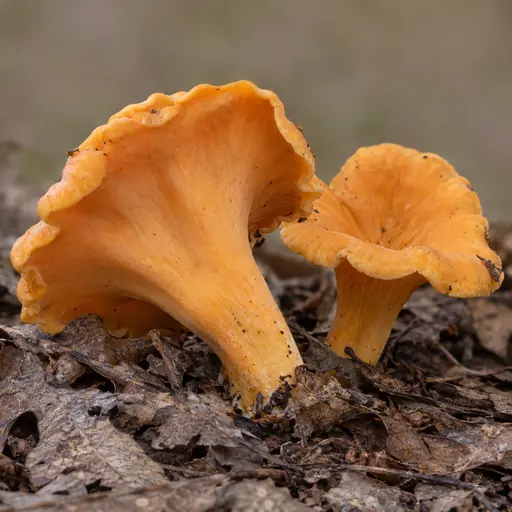
An orange chanterelle with an almost smooth underside instead of ridges. It smells strongly of apricots.
How to recognise it
The smooth chanterelle is bright orange-yellow to egg-yolk yellow and 2.5 to 8 cm across. It starts flat and later becomes a shallow vase with a wavy edge. Its underside sets it apart. It is smooth or only shallowly wrinkled, with no true gills. It is paler than the cap (often pinkish) and runs down the stem. The stem tapers to the base. The flesh is white and does not change when cut. The smell is usually strong and sweet, like apricots. Jack-o'-lanterns (Omphalotus illudens) are common in the same oak woods. They have sharp, crowded true gills and grow in tight clusters from wood or buried roots. They are also orange inside.
Where it grows
It lives with oaks and sometimes hickories. Look in hardwood and oak-pine woods across the eastern US, east of the Rocky Mountains. It is most common in the Southeast. It often comes up in troops on bare or mossy soil along paths, stream banks and road cuts.
When
This is a summer chanterelle, from June to September and most often from July. It comes soon after warm, heavy rain in humid weather.
Picking
Cut it at the base, leave the small ones and take only what you will eat. Rules differ by state, park and national forest. Many state parks forbid picking, so check before you go.
Cooking
Be sure of the identification, then brush off the soil. The smooth underside holds little grit. Never eat it raw. Cook it well, slowly in butter or in a cream sauce. It is fruity and mild like other chanterelles. It's good with eggs, grits, pasta, chicken and pork.
Keeping
A paper bag in the fridge keeps it for a few days. Drying makes it tough. For longer keeping, fry it in butter and freeze it.
Toxic look-alikes
- Omphalotus olearius · Toxic - do not eat
- Omphalotus illudens · Toxic - do not eat
- Omphalotus olivascens · Toxic - do not eat
- Omphalotus subilludens · Toxic - do not eat
- Hygrophoropsis aurantiaca · Not edible
Sources: Identification and habitat: MushroomExpert.com and University of Florida IFAS Extension. Season: GBIF records.
Always consult an expert before consuming any wild food. This information is for educational purposes only.