

Nettle
Urtica dioica
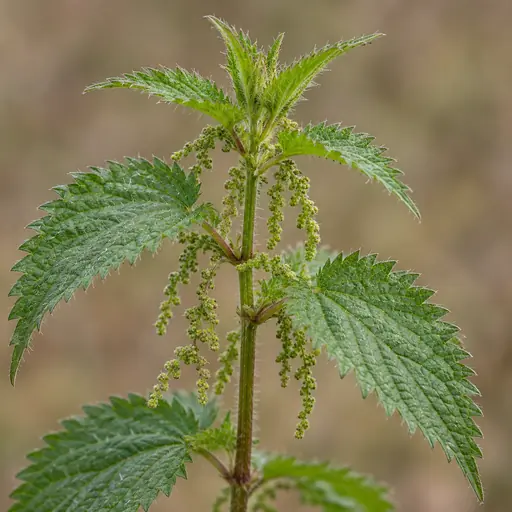
A nutritious green plant with stinging hairs. You always cook it before eating.
How to recognise it
Nettles grow upright, with square stems and leaves in opposite pairs. The leaves are heart-shaped to oval, coarsely toothed and pointed. Stems and leaves are covered in stinging hairs. From early summer, thin tassels of tiny greenish flowers hang where the leaves join the stem. Dead-nettles look similar, but they don't sting. They also have showy white, yellow or purple lipped flowers.
Where it grows
Nettles grow in dense patches on rich, moist soil. Look at woodland edges, riverbanks, ditches, hedgerows and around farms and old buildings. They are common throughout Europe. In the south they keep mostly to damp, shaded places. They also grow across most of the US, especially along streams and in moist open woods.
When
Young shoots appear from February in mild areas and from March further north. You can pick them until the plant flowers, from about June. Patches that have been cut or mown send up fresh shoots. That gives you a second picking in late summer and autumn.
Picking
Wear gloves. Snip the top few pairs of leaves with scissors and leave the roots. Avoid roadsides, sprayed field edges and paths where people walk dogs. Nettle patches also feed the caterpillars of many butterflies.
Cooking
Always cook or blanch nettles before you eat them. Heat takes away the sting and so does drying them well. Drop the washed tops into boiling salted water for a few minutes. Then use them like spinach, in soup, risotto, omelettes or pesto. They taste like spinach, only a little earthier.
Keeping
Blanch them, squeeze them and freeze them in portions. They keep for months. For tea, dry the leaves in a shady, airy place.
Sources: Identification, habitat and cooking: NC State Extension and Woodland Trust. Season: Woodland Trust and GBIF records.
Always consult an expert before consuming any wild food. This information is for educational purposes only.