

Wild mints
Mentha spp.
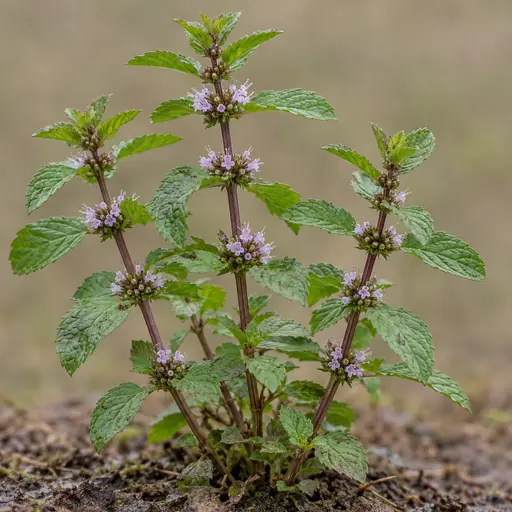
Every wild mint: water mint, horse mint, apple mint, corn mint and pennyroyal. They have square stems, leaves in pairs and smell of mint when crushed.
How to recognise it
All mints have square stems and leaves in opposite pairs. A crushed leaf has a clear mint smell. Small lilac, pink or white flowers grow in whorls, or in heads and spikes at the shoot tips. Water mint has hairy, oval leaves and a rounded flower head. Horse mint has long, grey-hairy leaves. Apple mint has round, wrinkled, soft leaves. Corn mint flowers only in whorls along the stem. Pennyroyal is small and creeping, with tiny leaves and a sharp smell. Unscented square-stemmed plants such as gipsywort grow among them. The smell also stays on your fingers. So smell each stem on its own and leave any that does not smell of mint.
Where it grows
Most wild mints like wet ground. Look at stream and pond edges, in ditches, marshes and wet meadows. Corn mint also grows in damp fields. Pennyroyal grows in grassland that floods in winter, mostly in southern and western Europe. In the US the native American wild mint grows in wet places across most of the country. Spearmint, peppermint and pennyroyal have escaped from gardens there.
When
Shoots appear in spring and are most tender before flowering. Most mints flower from midsummer into autumn. In southern Europe growth starts earlier.
Picking
Pinch off the top few pairs of leaves above a leaf joint and leave the roots. Pick stem by stem, not by the handful. Deadly hemlock water-dropwort and water hemlock grow in the same wet places. Avoid water below farms or sewage outlets.
Cooking
Once you've identified it with certainty, use the leaves for tea. They also go into salads, yoghurt sauces and dishes with peas, potatoes and lamb. Mint from streams, ditches or grazed wet pasture can carry liver fluke, like wild watercress. Use that mint only in hot tea or cooked. Pennyroyal contains pulegone, which harms the liver. A light tea is traditional in Spain and Portugal. But never use the oil and never drink it strong or often. Never give it to babies, children or anyone pregnant, breastfeeding or with liver disease.
Keeping
Hang bunches in a dark, airy place and they dry well for tea. Chopped leaves freeze in ice cubes.
Sources: Identification and habitat: Botanical Society of Britain and Ireland, The Wildlife Trusts and Native Plant Trust (Go Botany). Pennyroyal: European Medicines Agency and National Capital Poison Center. Liver fluke: Pan American Health Organization. Season: GBIF records.
Always consult an expert before consuming any wild food. This information is for educational purposes only.