

Common Plantain
Plantago major
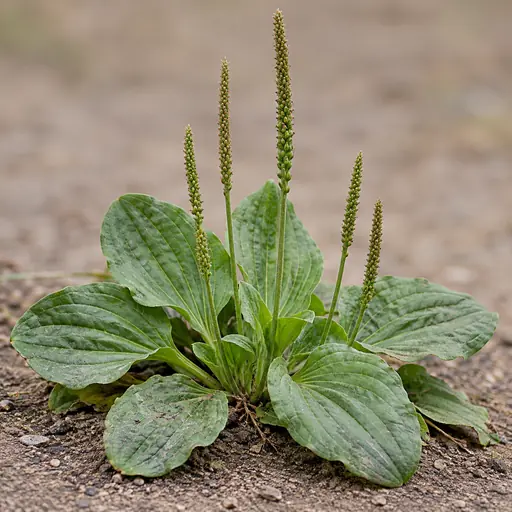
A low plant with broad oval leaves and tall flower spikes.
How to recognise it
Common plantain grows as a flat rosette of broad, oval leaves on short, wide stalks. Each leaf has three to seven strong veins. They run side by side from base to tip. Snap a leaf stalk and they pull out as tough strings. From early summer, leafless stalks carry long, narrow rat-tail spikes of tiny greenish flowers. Later these fill with small brown seeds. Foxglove is deadly and its first-year rosette is the one to watch for. It has soft, hairy, wrinkled leaves with a net of veins and no strings. Foxglove leaves have been sold by mistake as plantain.
Where it grows
Look on lawns, paths, farm tracks, field edges, meadows and gardens. It grows wherever the ground is trampled and compacted. It is native to Europe and Asia and common all over Europe. It is also common across the whole of the US, where it came with European settlers.
When
New leaves appear from early spring to autumn. They are most tender in spring and after mowing. Flower spikes rise from early summer and the seeds ripen into autumn.
Picking
Pick young leaves from the centre of the rosette, a few from each plant. Leave the root in the ground. Avoid roadsides and paths used by dogs. Also avoid lawns or verges that may have been sprayed with weedkiller.
Cooking
Once you're certain it's plantain, you can put young leaves raw into salads. Older leaves are tough and stringy. Blanch them or cook them like spinach and pull out the strings. The taste is mild, grassy and slightly bitter. NC State Extension notes that very large amounts can lower blood pressure. So eat it as one green among others.
Keeping
The leaves wilt fast. Keep them in a bag in the fridge for a day or two, or dry them in the shade for tea.
Toxic look-alikes
- Digitalis purpurea · Deadly - do not eat
Sources: Identification, habitat and season: NC State Extension, Michigan State University Extension and UC IPM. Foxglove mix-up: US FDA (1997). Kitchen: NC State Extension.
Always consult an expert before consuming any wild food. This information is for educational purposes only.