

Eastern King Bolete
Boletus variipes
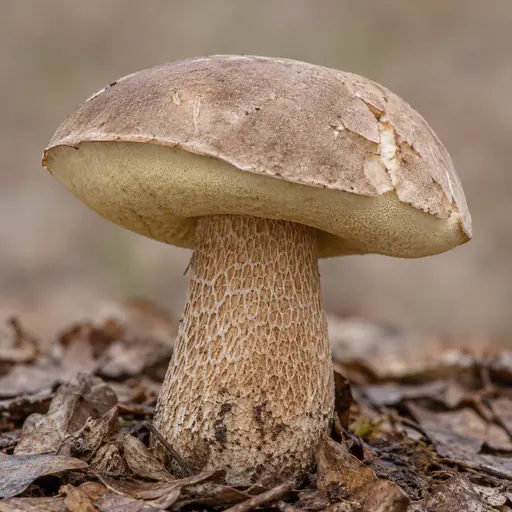
The porcini of the oak woods in the eastern US. The cap is tan to lilac-brown and the pores are white, turning yellow. It never bruises blue.
How to recognise it
This is a small group of eastern king boletes. Boletus variipes has a dry, velvety cap, tan to grey-brown, that often cracks. Boletus separans has a lilac-brown to liver-red cap that fades to yellow-brown. It also shows lilac on the stem. Both have white pores when young that turn yellowish. Both have a clear white to brownish net on the stem. Their white flesh does not change colour. Bitter Tylopilus have pores that turn pink. One example is the violet-grey Tylopilus plumbeoviolaceus. Red or orange pores (Neoboletus subvelutipes) mean a toxic bolete. So do bluing pores and flesh (Boletus sensibilis, Boletus huronensis).
Where it grows
It grows with oaks and also with beech and other hardwoods, east of the Rockies. It is most common from New York and the Great Lakes through Pennsylvania and the Appalachians to Georgia and the Ozarks. Boletus nobilis and Boletus atkinsonii belong to the same group.
When
It fruits from June to September, most of all in July and August. Look after warm, soaking summer rain.
Picking
Cut it or twist it out and slice it on the spot. Summer kings are often maggoty. Some national forests need a free permit and set daily limits. Parks have their own rules, which are often stricter.
Cooking
Make sure of your identification, then cook it through like porcini. Sauté it, or add it to pasta, soups and stews. You can also dry it for a deeper flavour. Use only firm, fresh ones.
Keeping
It dries very well in thin slices. Fresh, use it within a day or two.
Toxic look-alikes
- Rubroboletus satanas · Toxic - do not eat
- Rubroboletus rhodoxanthus · Toxic - do not eat
- Neoboletus subvelutipes · Toxic - do not eat
- Boletus sensibilis · Toxic - do not eat
- Boletus huronensis · Toxic - do not eat
- Rubroboletus pulcherrimus · Toxic - do not eat
- Rubroboletus eastwoodiae · Toxic - do not eat
- Rubroboletus legaliae · Toxic - do not eat
- Tylopilus felleus · Not edible
- Tylopilus rubrobrunneus · Not edible
- Tylopilus plumbeoviolaceus · Not edible
Sources: Identification and habitat: MushroomExpert (Michael Kuo). Season: GBIF and iNaturalist records. Rules: US Forest Service.
Always consult an expert before consuming any wild food. This information is for educational purposes only.