
Saffron Milk Cap
Lactarius deliciosus
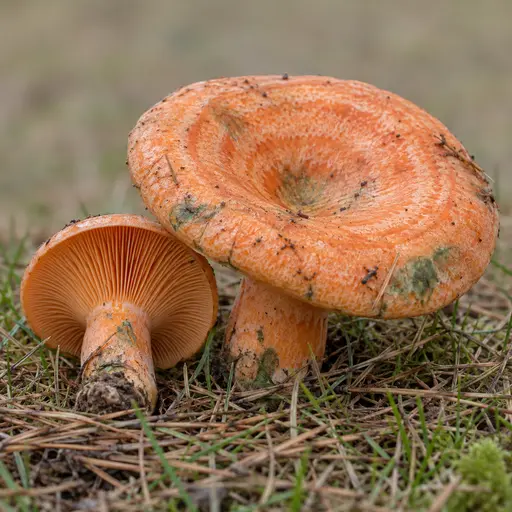
An orange cap with darker rings. It bleeds carrot-orange milk and bruises green. It is a favourite in Spain and Italy.
How to recognise it
The cap is orange with darker concentric rings. When young, its edge is rolled under. Later it turns funnel-shaped and is often blotched green. The crowded orange gills run slightly down the stem. The stem is short, hollow and orange, often with darker orange pits. Break a gill and look at the milk. It is carrot-orange and may slowly turn wine-red. Gills and flesh bruise green. White or yellowing milk means another milk cap. One is the woolly milk cap (Lactarius torminosus). It is pinker, has a woolly, bearded cap edge and grows with birch.
Where it grows
It grows under pines, on sandy or lime-rich soil. Look in young plantations and grassy clearings, where it often turns up. Close relatives grow under spruce (Lactarius deterrimus) and fir (Lactarius salmonicolor). It is common across Europe, above all in the pine woods of Spain, Portugal and Italy. In North America several related orange-milked species grow under conifers.
When
This is an autumn mushroom. In central and northern Europe it comes from late summer to November. In Mediterranean pine woods it follows the autumn rains, from October into January. On the US Pacific coast it fruits through the wet winter.
Picking
Cut the stem at the base and check it for larvae. Leave the small ones. In many regions of Spain and Italy you need a permit or must keep to a daily limit. Check the local rules.
Cooking
After you've identified it with certainty, cook it well. Grill it with garlic, olive oil and parsley, or stew it with potatoes or rice. It also goes with meat. The flesh is firm and slightly grainy, with a mild, resinous taste. Slow cooking removes any bitterness. The green stains are harmless. Its pigment can turn your urine red, which is harmless too.
Keeping
It keeps two days in the fridge. It does not dry well. Cook and freeze it instead, or preserve it in oil or vinegar.
Toxic look-alikes
- Lactarius torminosus · Toxic - do not eat
Sources: Identification and habitat: First Nature. Storage: ANSES. Season: GBIF records.
Always consult an expert before consuming any wild food. This information is for educational purposes only.