

Sea Buckthorn
Hippophae rhamnoides
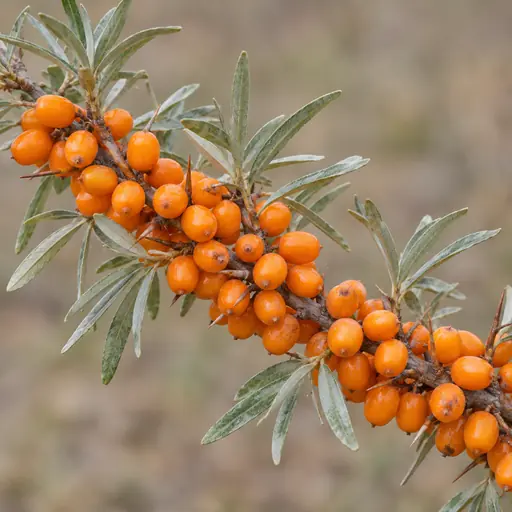
Bright orange berries packed along thorny branches with silvery leaves. They are sour and rich in vitamin C.
How to recognise it
Sea buckthorn is a thorny, much-branched shrub that forms thickets. Its narrow, willow-like leaves are covered in silvery scales, above all underneath. Male and female flowers grow on separate bushes, so only female bushes fruit. The berries are round and bright orange, 6 to 8 mm across. They sit packed tightly along the twigs on very short stalks. They are juicy and very sour and they burst at a touch. Rowan and firethorn also have orange berries. But they carry them in stalked bunches among green leaves.
Where it grows
It needs full sun and open sand or gravel. Look on the coastal dunes of the North Sea, the Baltic and eastern England. It also grows on dry gravel banks and terraces of rivers in the Alps and their foothills. In southern Europe it is mostly a plant of mountain river gravels, in the Alps and the Pyrenees. It is also planted on embankments and roadsides.
When
The berries ripen from August into October. They are most aromatic early in ripening. They hang on into winter, but overripe berries taste rancid.
Picking
Wild stands often grow in dune and riverside nature reserves, where picking is forbidden. Check the local rules first. Never cut branches from wild bushes. Wear gloves. Hold a bowl under the twig as you pick, because the berries burst. Leave plenty for wintering thrushes.
Cooking
If you're certain of the identification, you can eat the berries raw. But they are very sour, slightly bitter and they stain. Most people cook them briefly with a little water and honey or sugar. Then they strain them for juice, syrup, jelly or purée. Apple or apricot softens the sharpness. The purée suits yoghurt, muesli, ice cream and soups.
Keeping
Fresh berries spoil quickly. Freeze them, or freeze the juice in portions. You can dry the pulp left after pressing for tea.
Sources: Identification and habitat: The Wildlife Trusts and the European Environment Agency (EUNIS). Season, cooking and keeping: Bundeszentrum für Ernährung (BZfE).
Always consult an expert before consuming any wild food. This information is for educational purposes only.